Home
A notebook beside the fruit bowl. A charger trailing across the dining table. A laptop that moves from one room to the next, depending on who needs the space.
When you work from home, the work has to land somewhere. Finding that place can be difficult when every room already has a job.
You can start smaller than a home office. A workable arrangement begins with somewhere to sit, access to what you need and a clear way to return the space to everyday life.
Notice where the work already happens
Before moving furniture or buying a desk, pay attention for a few days. Where do you open your laptop? Which spot gives you enough light? When is that area quiet, and when does it become busy?
Choose around the work you do most often. Writing needs a comfortable surface and fewer interruptions. Packing orders needs room to spread out. Phone-based work may need a charging point and somewhere to keep notes within reach.
A beautiful corner that stays inconvenient will probably stay unused.
Give the essentials a small home
Begin with the items you use each time: your device, charger, notebook and any tools specific to the task. Keep those together in one drawer, tray or portable bag.
If you share a dining table, a work bag can be more useful than a collection of desk accessories. You can bring it out, get started and put everything away without finding a new place for each item.
Leave occasional supplies elsewhere. The whole business does not need to sit beside you while you answer one email.
Make the surface easier to use
Clear enough space for the task, rather than trying to perfect the room. Check that you can read the screen without strong glare, sit comfortably and reach your supplies without balancing them on your lap.
Work for one ordinary session before deciding what to buy. You may discover that the missing piece is a lamp, a longer charging cable or a more suitable chair. That observation is more useful than a shopping list built from someone else’s office photograph.
Plan how the space closes
In a shared room, the end of work matters as much as the beginning. Save the file, note your next step and return the loose items to their place.
Keep cables secured, particularly around children and pets. Avoid making a frequently used walkway part of your work setup.
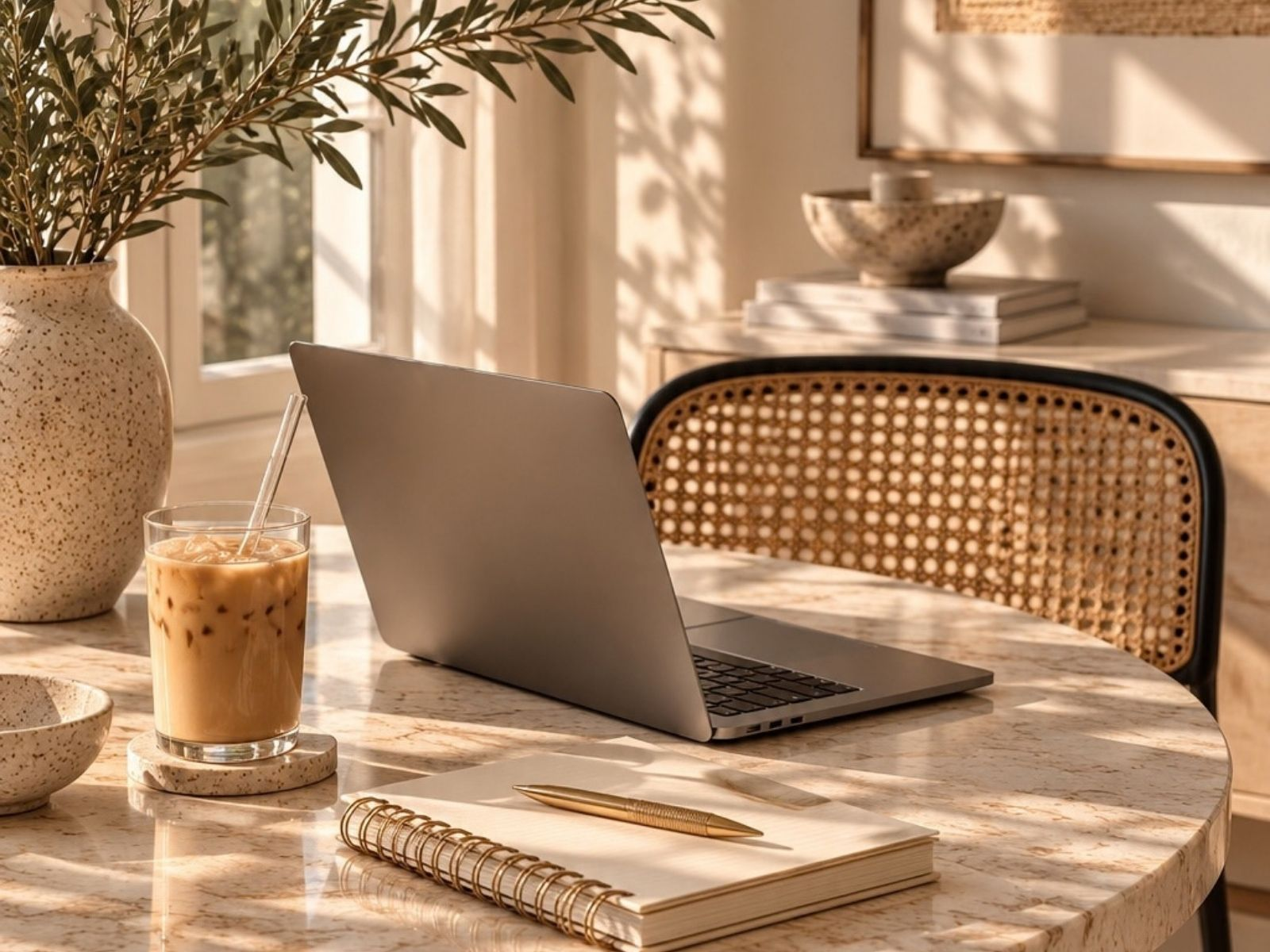
For example, a dining-table arrangement might consist of a laptop, one notebook and a nearby basket. At the end of the session, the laptop closes, the notebook goes into the basket and the table is ready for dinner. Small, repeatable and easy to understand.
Start with one useful change
Choose the place where work will happen tomorrow. Clear it, gather the essentials and decide where they will go afterward.
Your home can make room for your work without needing every corner to become part of it.
If your working hours shift around family life, A Work From Home Routine for Parents shows how to plan around the windows you have.
Fresh reads, useful tools and a little inspiration for your home and working life. Join The Letter to stay in the fold.
Keep reading