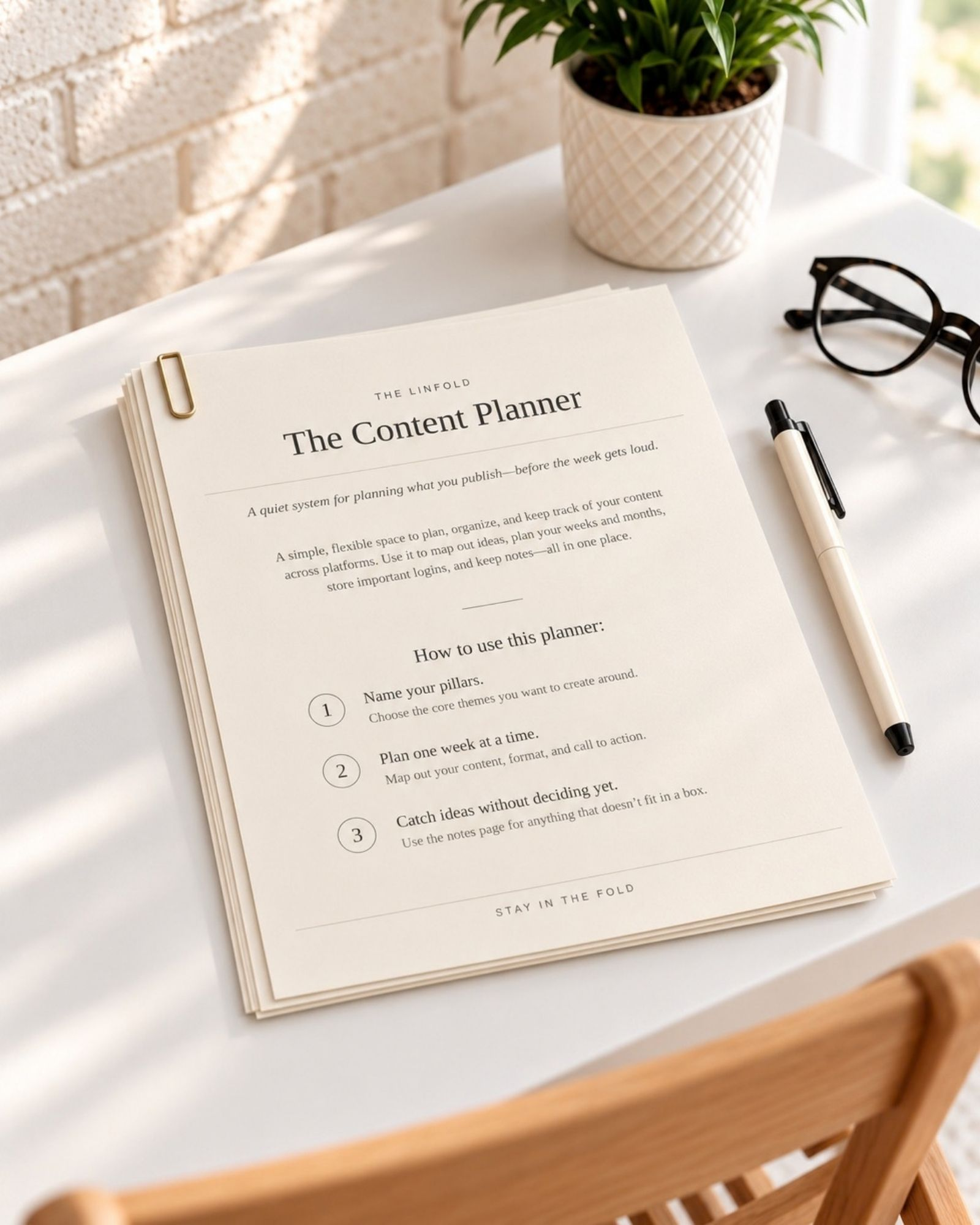
A blank calendar asks a lot of you. It wants topics, formats, dates and a sense of rhythm all at once, and it rarely says where to begin. That is why content calendar examples are so useful: seeing how a finished month or week is shaped makes it far easier to shape your own. Below are five distinct layouts, each written out in full, with a note on who it suits and how to adapt it.
None of these is the correct way to plan. Each one fits a particular season of business, a particular kind of week and a particular amount of time. Read through them, notice which one feels like relief rather than pressure, and start there.
What good content calendar examples have in common
Before the layouts, a word on what makes any calendar workable. The best ones share a few quiet traits, whatever their shape:
- A clear unit of time. A week, a month or a quarter. Mixing them on one page is where confusion starts.
- A reason behind each post. A topic, a pillar or a goal, so nothing is published only to fill a gap.
- Room to breathe. At least one open slot for something timely, or for a week when life takes over.
- A channel column. Knowing where a piece will live shapes how you write it.
Keep these in mind as you read. They matter more than the specific layout you choose.
Example 1: The pillar-based month
This layout rotates through three or four content pillars, the broad themes your brand returns to again and again. Each week gives every pillar one appearance, so your feed stays balanced without daily decisions. Here it is for a home and design brand publishing three times a week:
| Week | Pillar: Home | Pillar: Routines | Pillar: Behind the work |
|---|---|---|---|
| Week 1 | Styling a small entryway | A Sunday reset in five steps | How a photo shoot comes together |
| Week 2 | Choosing a calm color palette | Morning hours before the house wakes | A look at the desk this month |
| Week 3 | Linen, wood and texture | Meal planning for busy weeks | What changed in the studio |
| Week 4 | Open slot | Monthly reflection | Reader questions answered |
Who it suits: anyone with a clear brand and several topics to cover, especially if you tend to drift toward one favorite subject and neglect the rest.
Example 2: One idea, many formats
Here the week is built around a single core idea, written once in depth and then shaped for each channel. It can reduce repeated topic planning, because the thinking happens once. The approach is explored further in Create Once, Adapt With Intention.
| Day | Format | Channel | Angle |
|---|---|---|---|
| Monday | Long article | Blog | How to plan a slower week at home |
| Tuesday | Letter | The personal story behind the article | |
| Wednesday | Three pins | Key steps, each as its own image | |
| Thursday | Carousel | Five slides summarizing the method | |
| Friday | Short note | Instagram stories | A reader question and your answer |
Who it suits: work-from-home parents and anyone with limited hours who still wants a presence on more than one channel.
Example 3: The launch countdown
When you have something to sell, whether a digital product, a course or a new service, the calendar should lead toward it. This layout works backward from launch day across four weeks, moving from warming up the topic to the open invitation.
| Week | Focus | Example content |
|---|---|---|
| 4 weeks out | Name the problem | An article on the frustration your offer solves |
| 3 weeks out | Share your approach | A free guide or method, plus an email on why it works |
| 2 weeks out | Show the offer taking shape | Behind-the-scenes posts, a waitlist invitation |
| Launch week | Open the doors | Announcement email, product walkthrough, answers to common questions |
| Week after | Close the loop | A final reminder, then a thank-you note to your list |
Who it suits: entrepreneurs with a specific offer and date in mind. Use it for a month, then return to a steadier layout.
Two quieter layouts: the seasonal quarter and the two-post week
Example 4: The seasonal quarter
Lifestyle content follows the year: fresh starts in January, gardens in spring, back-to-school in late summer, gathering and gifting toward winter. A seasonal quarter plans themes by month and leaves the weekly detail for later.
| Month | Theme | Anchor pieces |
|---|---|---|
| September | Returning to rhythm | School-year routines, a desk refresh, autumn reading |
| October | Warmth at home | Layering textiles, slow weekend cooking, evening light |
| November | Gathering | Hosting with ease, a gratitude practice, planning for December |
Who it suits: lifestyle, home and family creators whose readers live by the calendar, and anyone who likes to see the bigger picture before filling in weeks.
Example 5: The minimal two-posts-a-week calendar
Sometimes the most useful calendar is the smallest one. Two fixed slots a week, one longer piece and one shorter, is enough to stay present and build a body of work.
- Tuesday, the main piece: one article or one email, written over the weekend or in a quiet morning block.
- Thursday, the companion: a short post or pin drawn from the Tuesday piece, ready in under thirty minutes.
- Everything else is optional. If you have extra time, add a story or a note. If you do not, the week is still complete.
Who it suits: new creators, parents of young children, and anyone returning after a break. It is also a sensible fallback when a fuller calendar starts to slip. The case for doing less, with more focus, is made in Do More Isn’t a Strategy.
How to choose and adapt your layout
Start with an honest look at your available hours, then pick the layout that fits them rather than the one that looks most impressive. A few guiding questions help:
- Do you have something to sell soon? Begin with the launch countdown.
- Are your hours limited and scattered? Choose one idea, many formats, or the two-post week.
- Does your content feel unbalanced? The pillar-based month will even it out.
- Do you lose the thread over longer stretches? Plan a seasonal quarter first, then fill in weeks.
Layouts also combine well. A seasonal quarter can hold pillar-based months, and a launch countdown can sit inside a quarter for four weeks before you return to your usual pace. Whatever you choose, give it a full month before judging it. The first week of any new calendar feels awkward, and the shape only proves itself with repetition. If you prefer to plan on paper, the Monthly Overview in The Essential. can help you map themes and publishing dates. Use additional pages or a spreadsheet if you need a quarterly view or more production detail.
Your content calendar checklist
- Decide whether you are planning a week, a month or a quarter
- Count the hours you can give to content each week
- Choose one layout from the five above
- Name your pillars or seasonal themes
- Add a channel to every slot
- Leave at least one open slot each week
- Run the layout for a full month before changing it
Keep reading